
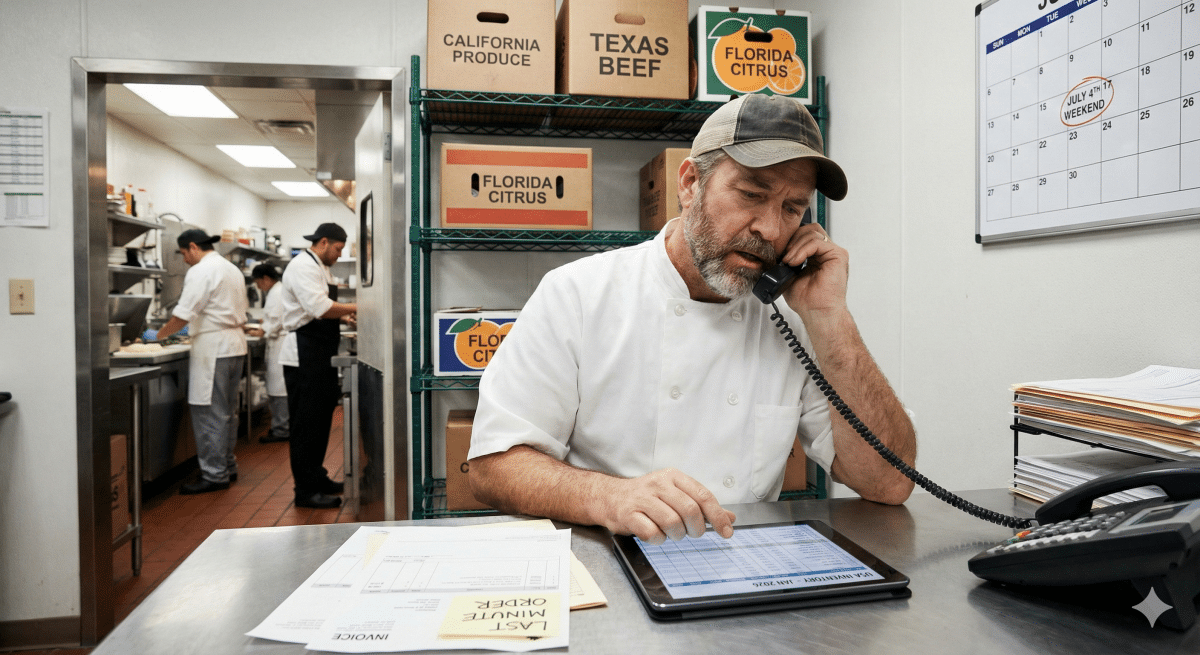
For U.S. restaurant operators, inventory management in 2026 is no longer simply a purchasing or cost-control function. It has become a core decision that affects brand consistency, operational stability, and cash-flow safety.
With ongoing economic uncertainty, continued pressure across logistics networks, and less predictable delivery performance, few businesses want to tie up cash in inventory earlier than necessary. Cash-flow flexibility remains a critical consideration in 2026.
As a result, working with reliable authorized dealers and clearly understanding how manufacturers are preparing for uncertainty has become a practical, disciplined approach for many chain restaurants and hotel groups.
Inventory Has Become Part of Brand Stability
In the U.S. market—especially for multi-unit operators—stockouts impact more than one location. When a core item is unavailable, the result is often:
- Inconsistent service standards
- Gaps in the guest experience
- Increased pressure on on-site teams
- Reduced guest confidence in the brand
In 2026, the purpose of inventory strategy is not simply to minimize on-hand stock. It is to keep service reliable even when the supply environment is not.
No One Wants to Spend Early—But Service Disruptions Cost More
The real question for many U.S. operators is not “Should we hold more inventory?” The question is whether to prepare responsibly, within a controlled range, for items that truly cannot be out of stock.
When supply interruptions occur, the consequences often include:
- Higher costs from emergency sourcing
- Substitutions that can impact quality and guest perception
- Rapidly increased operational pressure during peak periods
In this environment, reducing supply risk is often more valuable than aggressive inventory reduction.
Two Responsible Inventory Strategies Commonly Used in 2026
Strategy One: Limited, Controlled Coverage for Critical Items
This is not about hoarding inventory. It is about protecting continuity for items that would disrupt service if unavailable. Operators typically apply planned buffer coverage only to:
- High-volume, core menu items
- Ingredients with limited substitution options
- Essential operational supplies and packaging
The goal is stability—not excess.
Strategy Two: Stronger Coordination With Authorized Dealers and Manufacturer Planning
Many chain restaurants and hotel groups are prioritizing reliability over single-factor pricing decisions. Mature supply partners often provide:
- Clear communication around delivery timing and risk
- Advance planning for holidays, peak travel, and large events
- More consistent fulfillment during disruption periods
This approach can improve supply reliability without forcing restaurants to carry unnecessary inventory.
An Overlooked Factor: Warehouse and Allocation Structure
Supply stability is influenced by how inventory is managed behind the scenes. Some manufacturers control their own warehouses, while others rely on third-party logistics providers.
Both models are widely used and valid, but they can behave differently under pressure. Understanding these structures helps operators plan more realistically for critical items and peak periods.
Manufacturer Communication Without Changing the Purchasing Model
In uncertain supply conditions, some restaurant groups choose to communicate directly with manufacturers strictly for information and planning purposes—such as understanding capacity planning, warehouse structure, and peak-season constraints.
This does not mean purchasing directly from manufacturers, and it does not replace authorized dealers. All purchasing should continue to flow through approved distribution partners.
The purpose of these conversations is to support better coordination with authorized dealers—so restaurants can plan calmly, rather than react under pressure.
Plan Around Real Usage and Seasonal Demand
A disciplined 2026 approach starts with average weekly or monthly usage, then adjusts for major holidays, convention schedules, travel seasons, and regional events.
This method reduces both shortage risk and unnecessary cash exposure.
Conclusion: Reliability Is the Competitive Advantage in 2026
Successful inventory management in the U.S. in 2026 is not about spending early. It is about working with dependable partners, understanding supply realities, and preparing responsibly for uncertainty.
Preparedness is not inefficiency. Stability is not excess. In a complex supply environment, reliability protects both the guest experience and the brand.